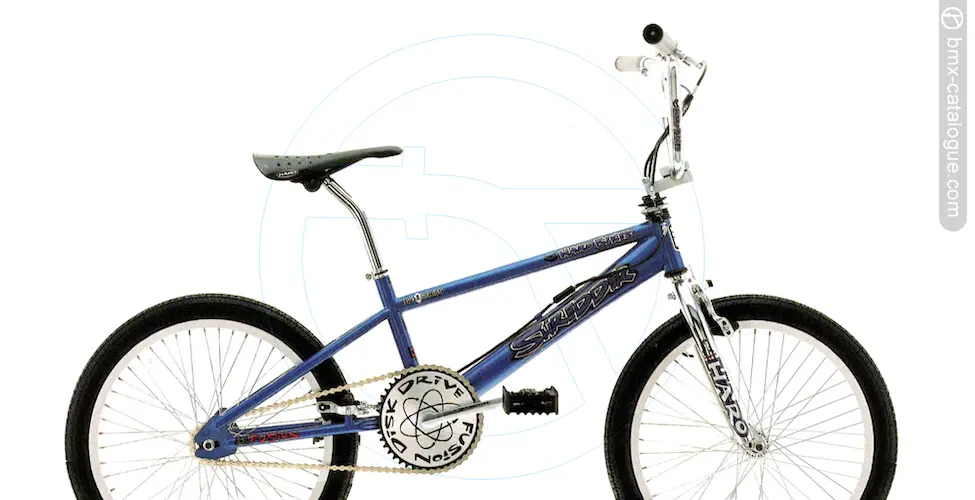
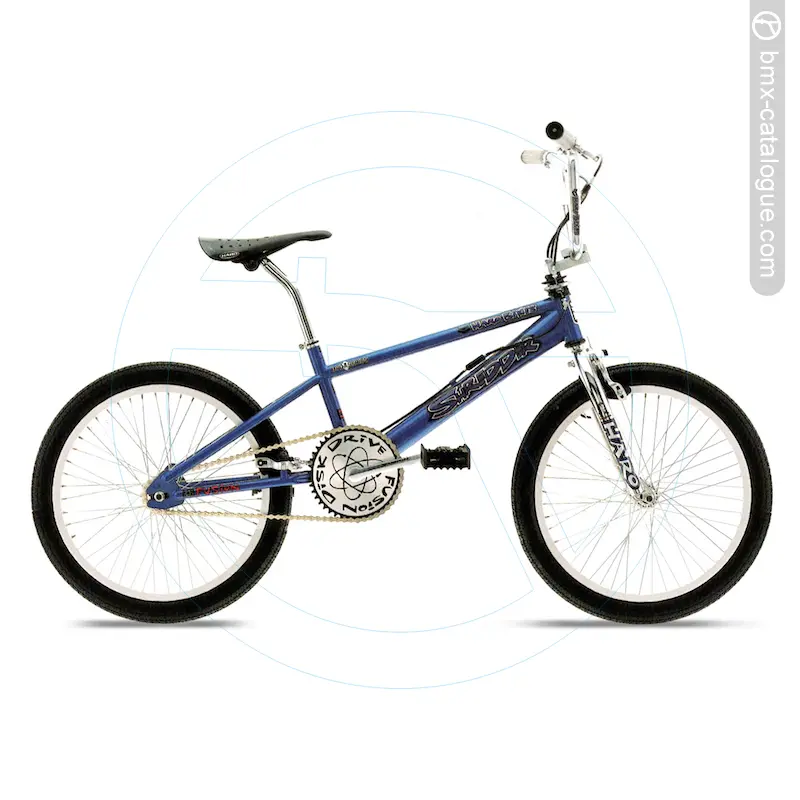
By 1996, the Haro Shredder had evolved from the affordable, full-featured freestyler introduced in 1989 into a dependable mid-school all-rounder. This version used Haro’s Megatube frame, with a chromoly seat tube and U-brake mounts, matched to a tapered chromoly fork. Its 19-inch top tube and 27.6-pound weight kept the bike manageable, while the 72.5-degree head angle gave it responsive street and ramp manners. A genuine Odyssey Gyro allowed unrestricted handlebar rotation, and the braking package combined a Dia-Compe MX-884 Bulldog front caliper with a rear alloy U-brake. Haro specified sturdy 48-hole alloy rims and low-flange alloy hubs, wrapped in 20 x 2.1 Multisurface tyres. The 175 mm one-piece crank drove a 44-tooth Fusion disc and 16-tooth freewheel. Finished in Spark Blue or chrome, the 1996 Shredder delivered recognisable Haro freestyle character at an accessible level for riders progressing beyond basic neighbourhood cruising, sitting below the more highly equipped Shredder Deluxe.
1996 Haro Shredder. RIDER PROFILE: Average Joe... not into racing but won't settle for some lame average biker... likes to cruise the neighborhood and look cool. CRMO seattube Megatube frame. Chromo tapered fork. Gyro cable detangler. Alloy 48 hole rims. 48 hole alloy hubs. Dia-Compe Bulldog brakes. Haro freestyle handlebar. Haro Multisurface 2.1 tires.
Frame & Fork
1pc Cranks
Haro Alloy Rims
To use the BMX serial number finder start typing the whole serial into the search bar at the top of the page, or use the Advanced Search page. Based on your entry, a filtered list of possible bikes that match your serial year and month will appear.
Haro BMX serial numbers.
The first two characters KH is the factory code. The next character is year of production. 5 = 1995, 6 = 1996. Depending on the factory, production may have started around June 1995 through to May 1996.
After the year is month of production. A to L = January to December.
Example: KH5K00000
Made in Taiwan.
As a general rule, bikes made in Taiwan at this time had around a 5 month production lead timeline before they were delivered and sold in bike shops around the world. Generally around May of each year, factories would switch production to making models for the following year.