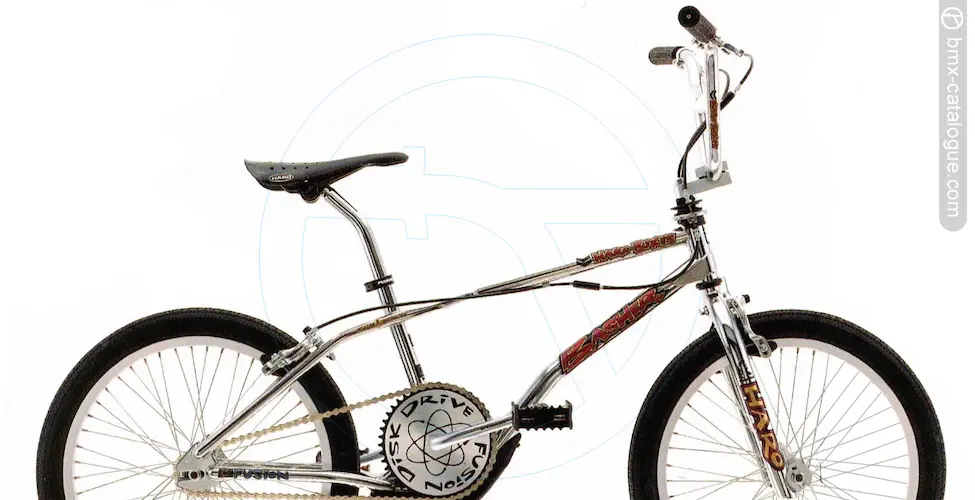
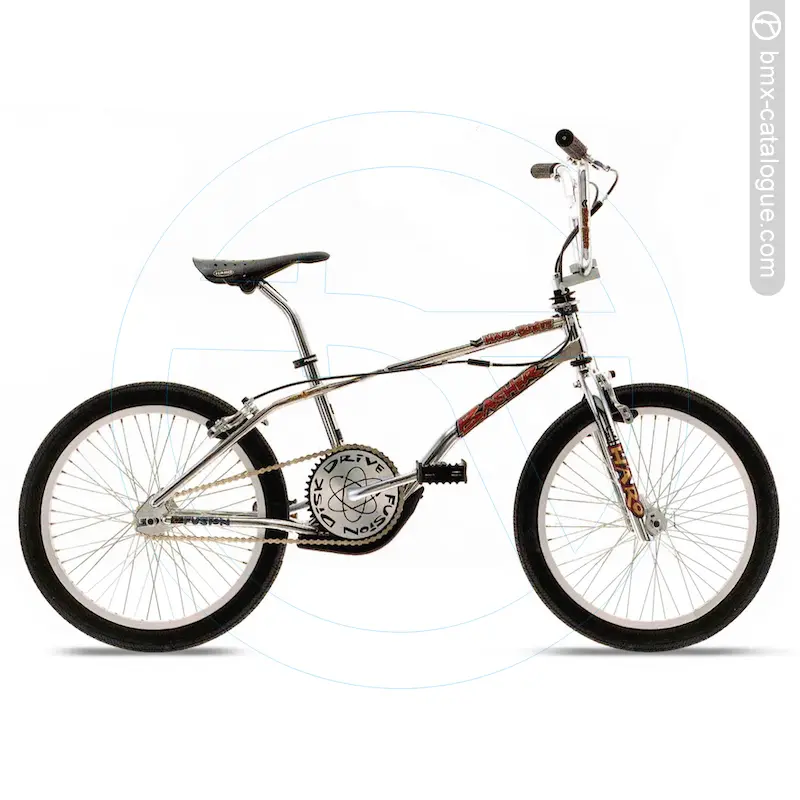
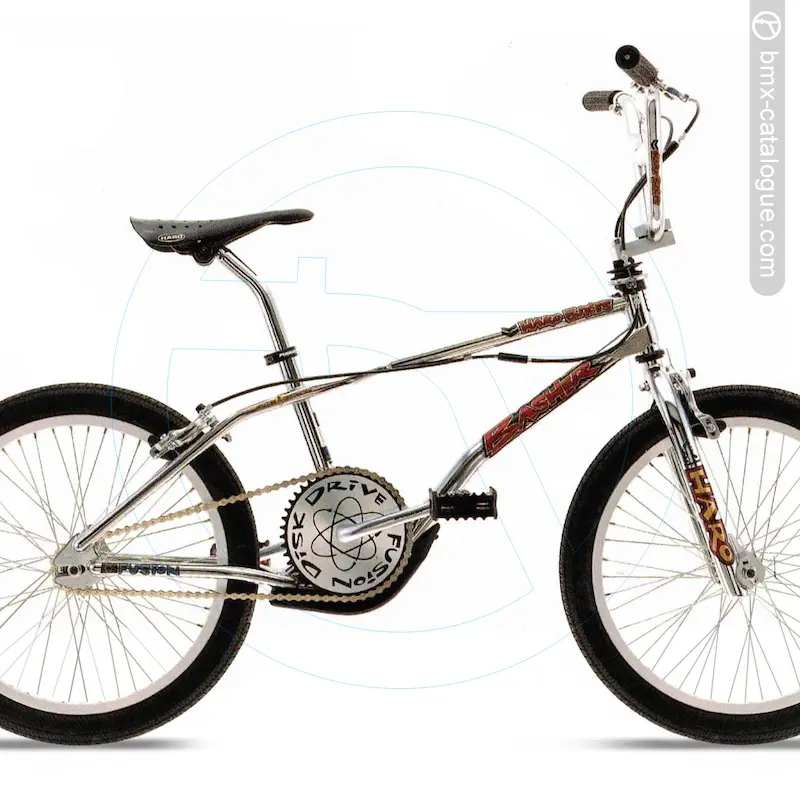
The 1996 Haro Basher effectively replaced the Sport within Haro’s reorganised freestyle range, preserving its bashguard concept under a new mid-school name. Like the 1995 Sport, it used a 20.25-inch top tube, 72.5-degree head angle and 70.5-degree seat angle, giving ramp riders a longer, steadier platform than the compact Shredder models. Its two-into-one freestyle frame incorporated a bashguard and chromoly seat tube, while a one-inch threadless chromoly Megafork modernised the front end. Specification was more accessible than the outgoing all-chromoly Sport: Haro freestyle bars, a 175 mm one-piece crank, Fusion resin pedals and 44-tooth Disk Drive replaced several premium parts. Nevertheless, an Odyssey Gyro, twin Dia-Compe MX-884 Bulldog brakes, Araya 7X 48-hole alloy rims and 20 x 2.1 Multisurface tyres maintained credible freestyle capability. At 30.25 pounds, the chrome-only Basher was 2.5 pounds lighter than the 1995 Sport, bridging the Shredder family and Haro’s specialist Ultra and Blammo Super machines.
1996 Haro Basher. RIDER PROFILE: Hardcore aerialist on both vert and miniramps... future stuntman. Bash guard two into one top tube frame. CRMO Megafork. Gyro cable detangler. Alloy 48 hole rims. 48 hole alloy hubs. Dia-Compe Bulldog brakes. Haro freestyle handlebar. Fusion Chromo crank. Haro Multisurface 2.1 tyres.
Frame Seat Tube
1pc Cranks
Araya 7X Alloy Rims
To use the BMX serial number finder start typing the whole serial into the search bar at the top of the page, or use the Advanced Search page. Based on your entry, a filtered list of possible bikes that match your serial year and month will appear.
Haro BMX serial numbers.
The first two characters KH is the factory code. The next character is year of production. 5 = 1995, 6 = 1996. Depending on the factory, production may have started around June 1995 through to May 1996.
After the year is month of production. A to L = January to December.
Example: KH5K00000
Made in Taiwan.
As a general rule, bikes made in Taiwan at this time had around a 5 month production lead timeline before they were delivered and sold in bike shops around the world. Generally around May of each year, factories would switch production to making models for the following year.