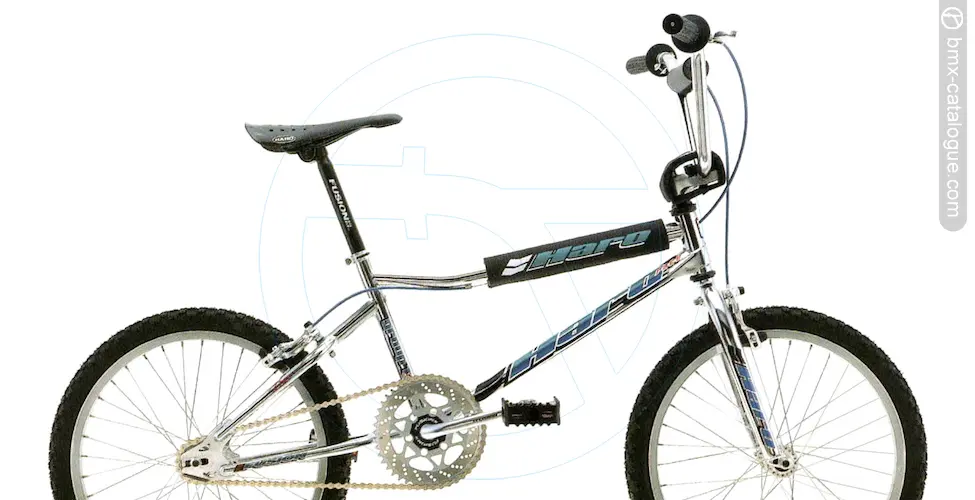
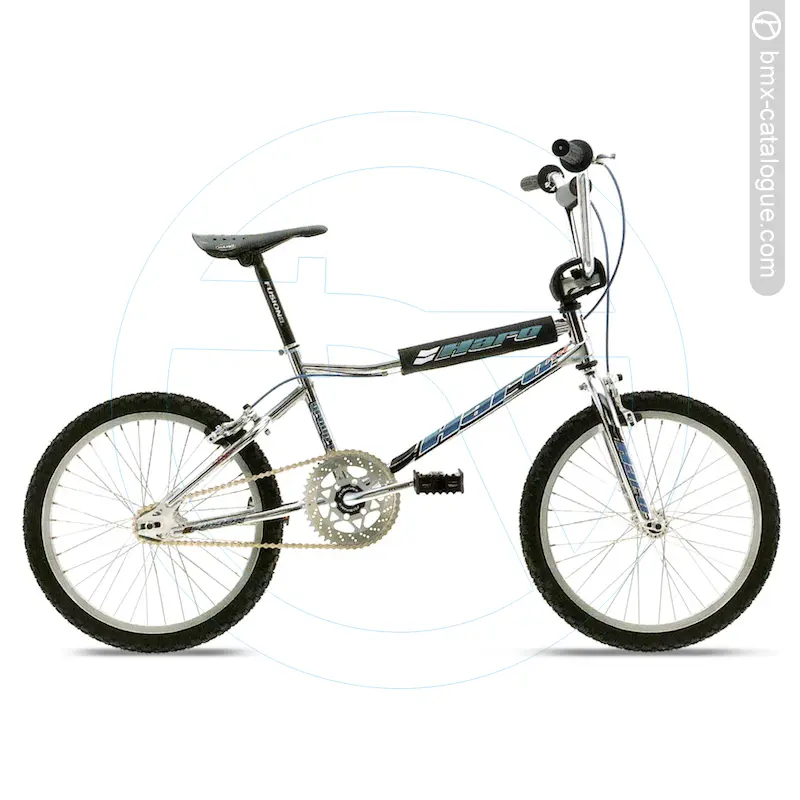
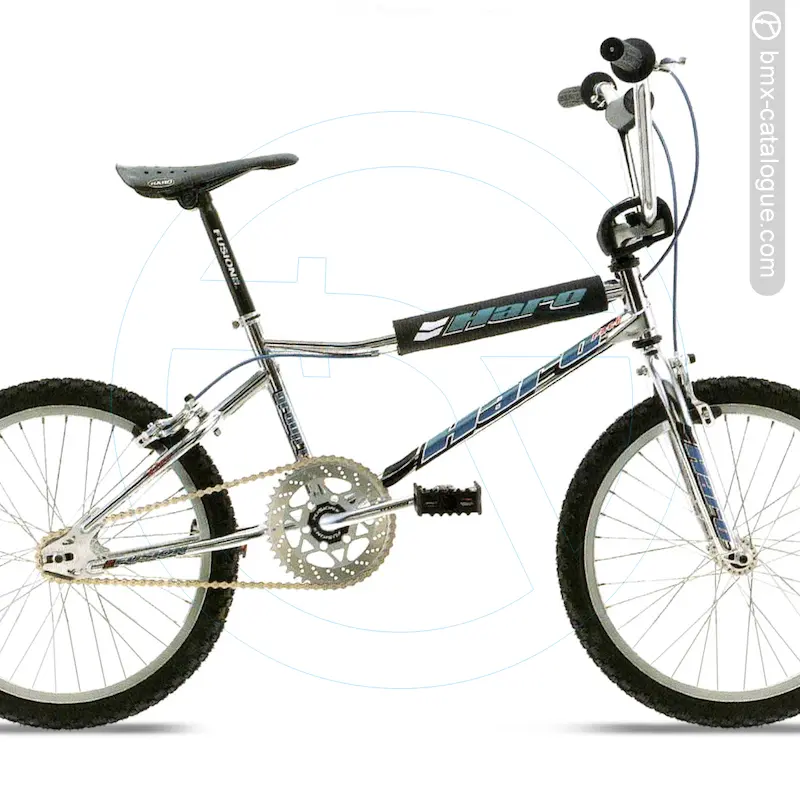
Returning for its second season, the 1996 Haro Group 1 Zi remained the starting point in Haro’s Group 1 race family. Introduced in 1995 for younger riders ready to move beyond department-store bikes, it offered race styling without the cost or specialist components of Haro’s higher-level machines. The high-tensile steel V-bar frame featured a rear monostay and adult-length 20.6-inch top tube, while shorter 165 mm one-piece cranks better suited developing riders. A 74.5-degree head angle delivered responsive steering, with Haro’s tapered high-tensile fork and racing handlebar reinforcing its track-focused character. The 44-tooth Fusion alloy Disk Drive and 16-tooth freewheel provided BMX gearing. Durable chrome-plated 36-hole steel rims were paired with ACS alloy fat hubs and Haro Holeshot tyres. Front and rear Dia-Compe MX-884 Bulldog brakes offered control for newcomers. Weighing 27.75 pounds and available in black or Anno Blue, the Zi made the Group 1 identity approachable for young racers.
1996 Haro Group 1 Zi. RIDER PROFILE: A kid ready for his first. "real" bike... a step up from department store bikes. Hi Ten V-bar Monostay frame. Tapered racing fork. Chrome plated rims. ACS alloy hubs. Dia-Compe Bulldog brakes. Haro racing handlebar. 165mm crank. Haro Holeshot 1.75 tires.
Frame & Fork
1pc Cranks
Steel Rims
To use the BMX serial number finder start typing the whole serial into the search bar at the top of the page, or use the Advanced Search page. Based on your entry, a filtered list of possible bikes that match your serial year and month will appear.
Haro BMX serial numbers.
The first character K is the factory code. The next two characters are the model ZI. The next character is year of production. 5 = 1995, 6 = 1996. Depending on the factory, production may have started around June 1995 through to May 1996.
After the year is month of production. A to L = January to December.
Example: KZI5K00000
Made in Taiwan.
As a general rule, bikes made in Taiwan at this time had around a 5 month production lead timeline before they were delivered and sold in bike shops around the world. Generally around May of each year, factories would switch production to making models for the following year.