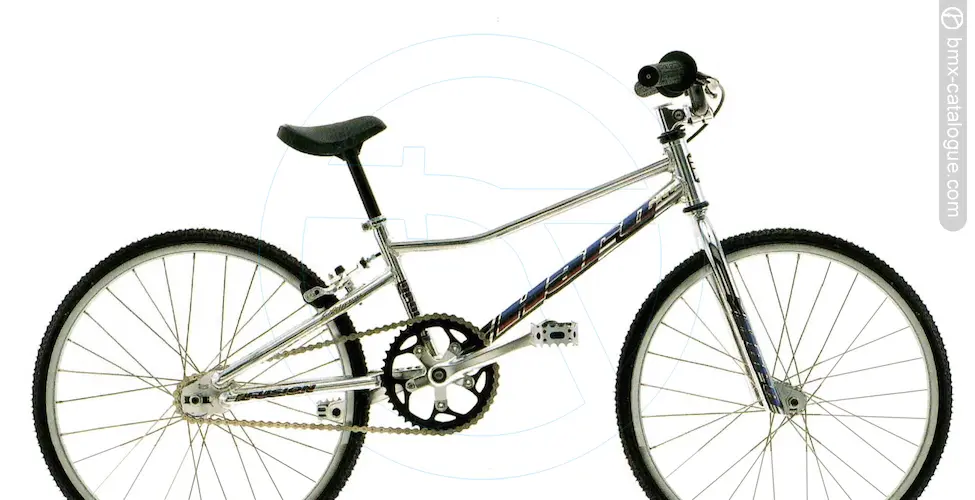
Introduced with Haro’s Elite series for 1996, the Group 1 Elite Jr brought flagship race technology to smaller, competitive riders. Rather than serving as an introductory youth bike, it targeted national-points contenders progressing towards factory-level competition. Its 7005-aluminium Mini frame used an 18.1-inch top tube, 71-degree head angle and 67-degree seat angle, creating compact proportions for junior racers. At only 15.3 pounds, it was lighter than every Group 1 complete. A threadless tapered chromoly fork, Fusion clamp-on stem and 6061-T6 Race Lite alloy handlebar provided a cockpit. 165 mm three-piece alloy cranks and a 42-tooth chainwheel matched smaller riders while retaining high-end efficiency. Ukai 32-hole alloy rims, sealed-bearing Suzue hubs and narrow 20 x 1.125 tyres reduced rotating mass for acceleration. A Dia-Compe Mini rear caliper supplied braking. Within Haro’s 1996 hierarchy, the Elite Jr stood apart as a purpose-built junior race machine, not a reduced-cost version of the Elite.
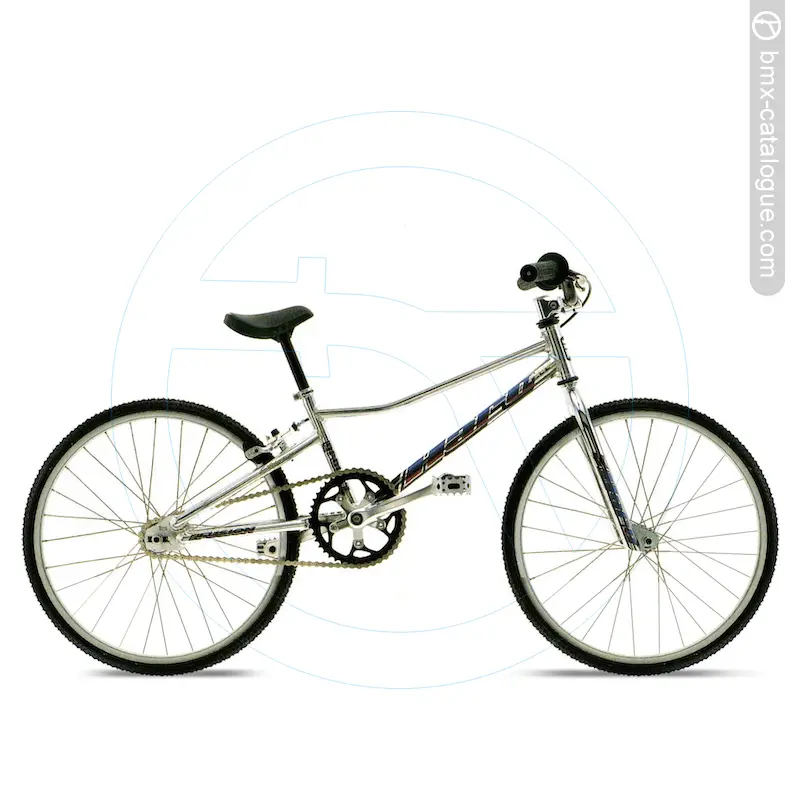
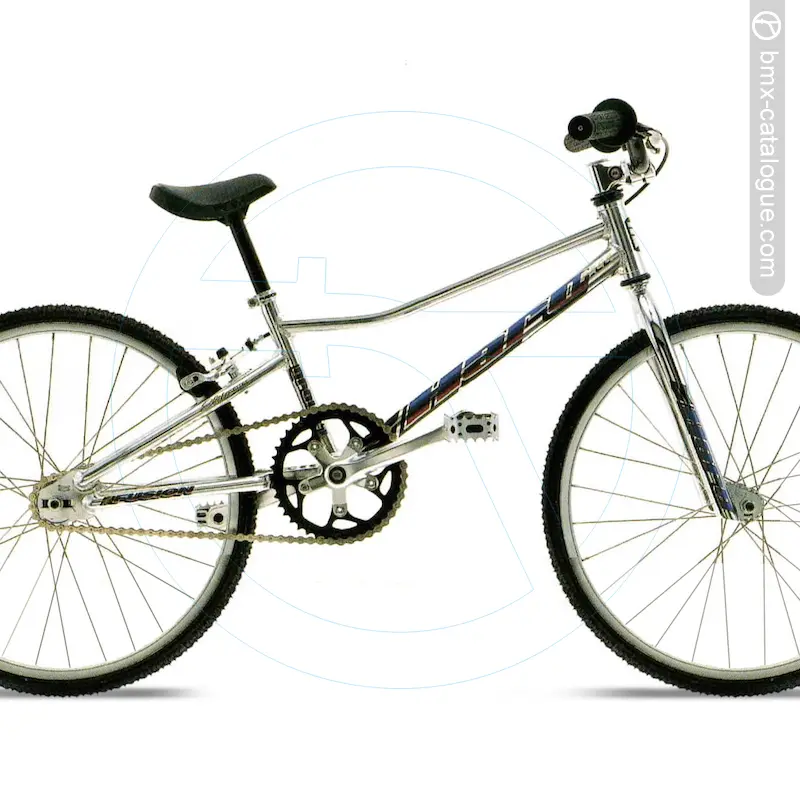
1996 Haro Group 1 Elite Jr. RIDER PROFILE: Young Fanatic. National points chaser. Probably the last bike he'll buy before getting a factory ride. Aluminium V-bar monostay frame. Tapered racing fork. Chrome plated Ukai alloy rims. Suzue alloy hubs with stainless steel spokes. DiaCompe rear brake. Fusion alloy racelite handlebar. Pro/4 forged aluminium cranks. Superlight 1 1/8” tires.
Frame Aluminum
3pc Alloy Cranks
Ukai Alloy Rims
To use the BMX serial number finder start typing the whole serial into the search bar at the top of the page, or use the Advanced Search page. Based on your entry, a filtered list of possible bikes that match your serial year and month will appear.
Haro BMX serial numbers.
The first two characters KH is the factory code. The next character is year of production. 5 = 1995, 6 = 1996. Depending on the factory, production may have started around June 1995 through to May 1996.
After the year is month of production. A to L = January to December.
Example: KH5K00000
Made in Taiwan.
As a general rule, bikes made in Taiwan at this time had around a 5 month production lead timeline before they were delivered and sold in bike shops around the world. Generally around May of each year, factories would switch production to making models for the following year.